Smarteh SHC Reference Project: Smart Boiler Room for Heating & Cooling
22. 10. 2026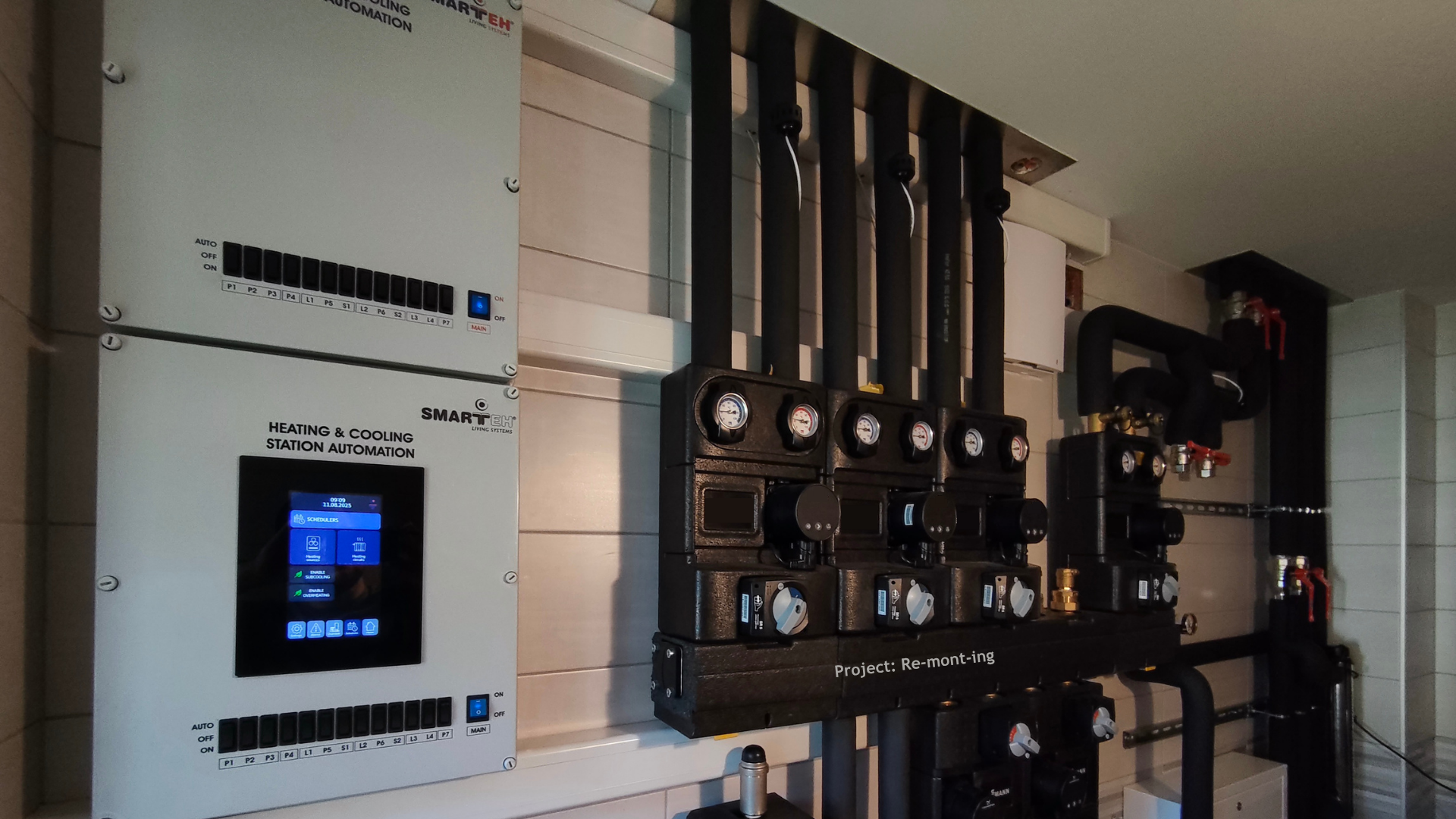
The Smarteh Heating & Cooling (SHC) project was carried out in the boiler room of a renovated older building, where a complete solution for heating control and domestic hot water preparation was set up using two heat sources.
SHC cabinets used:
SHC-002 and SHC-E02
Heat sources:
Solar energy (solar collectors) and wood-fired heating. The system enables flexible switching and optimal use of both sources depending on availability and current temperature conditions.
Mixing circuits:
6 independently controlled mixing circuits.
Pumps:
6 circulation pumps (230V), with advanced regulation through the SHC system. 1 PWM supply pump for hydraulic swich.
Heat storage tanks:
2 1500-litre tanks, connected in series.
Domestic hot water:
400-litre boiler with 1 heat exchanger.
Temperature sensors used (PT1000):
6x PT1000-1CH on the heating circuits, 2x PT1000-1C on the boiler, 2x PT1000-1CH on the hydraulic switch, 4x PT1000-1I on the storage tanks, 1x PT1000-1C on the return line, 1x PT1000-1I in the wood-fired boiler, 1x PT1000-1I on the solar collectors, 1x PT1000-2E outdoor sensor on the building facade, and 1x PT1000-2 indoor sensor in the boiler room.
Divert modul:
Enables switching between two heat sources, two solar collector fields, or sequential charging of two storage tanks. It is independent and configurable to fit the building’s specific needs. In this project the switching module is used for sequential charging of two storage tanks.
Hydraulic switch:
Prevents interference between heat sources by balancing the flow rates of the supply pumps, ensuring reliable operation of the entire system.
Installer & user feedback
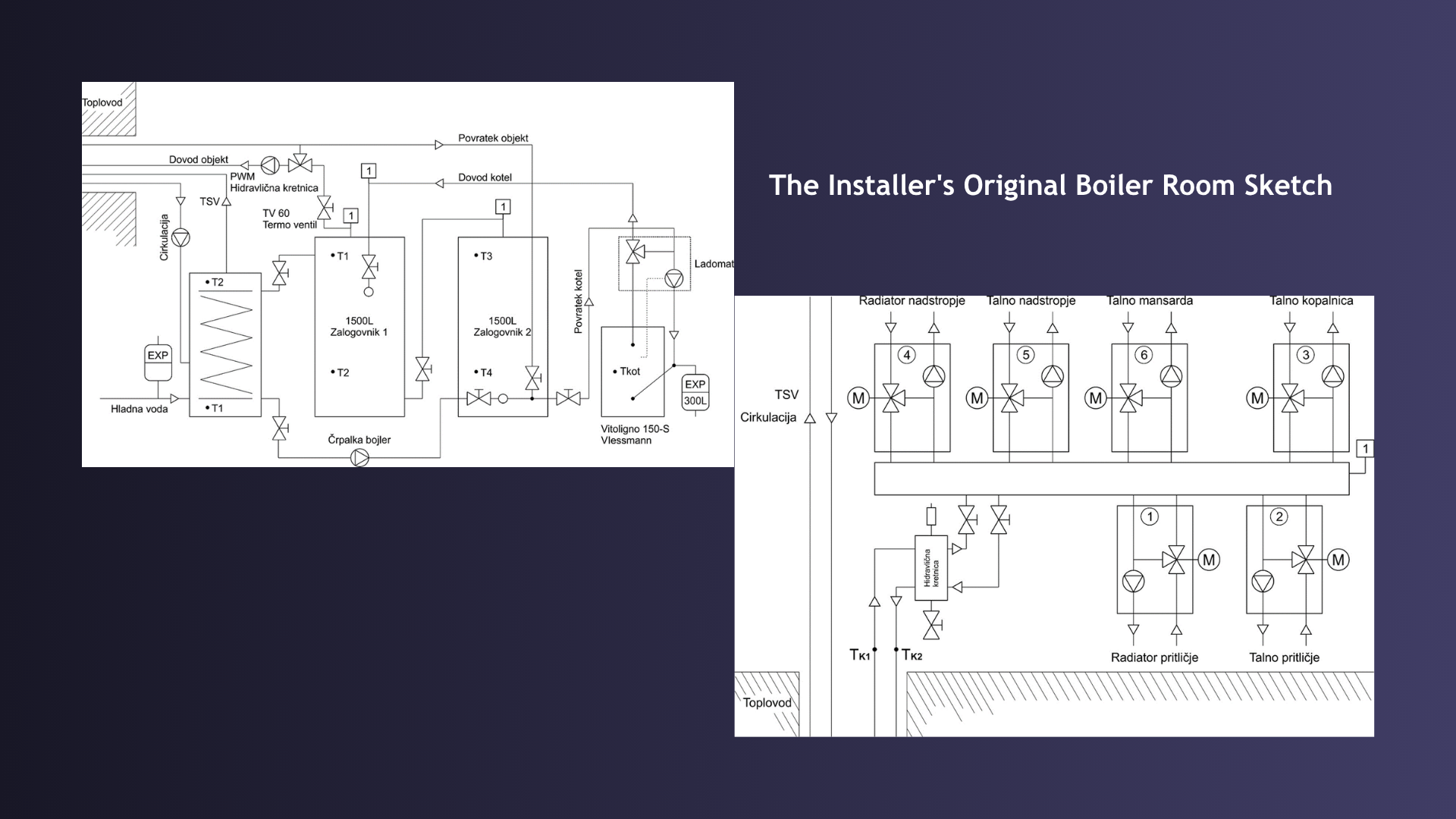
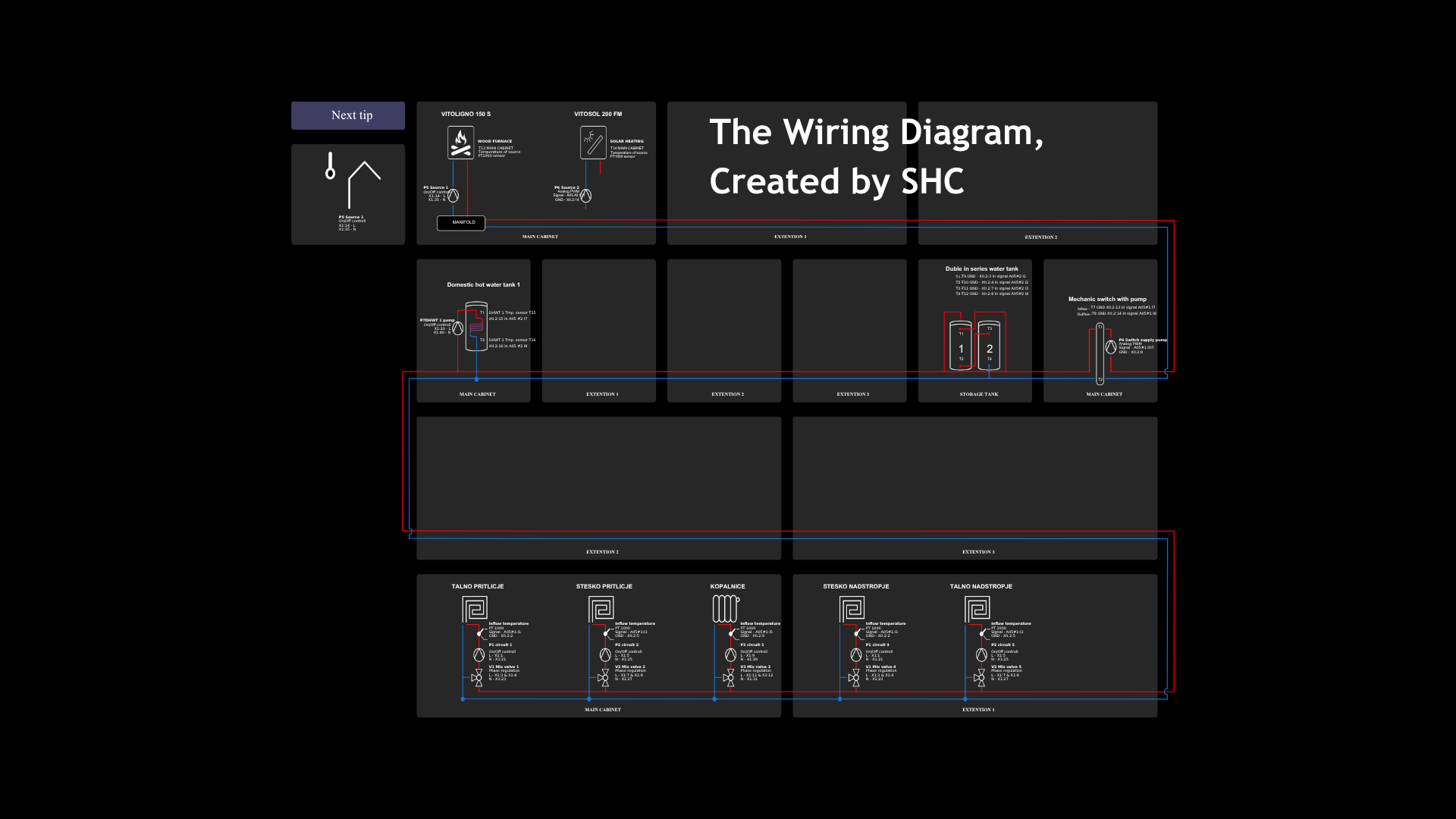
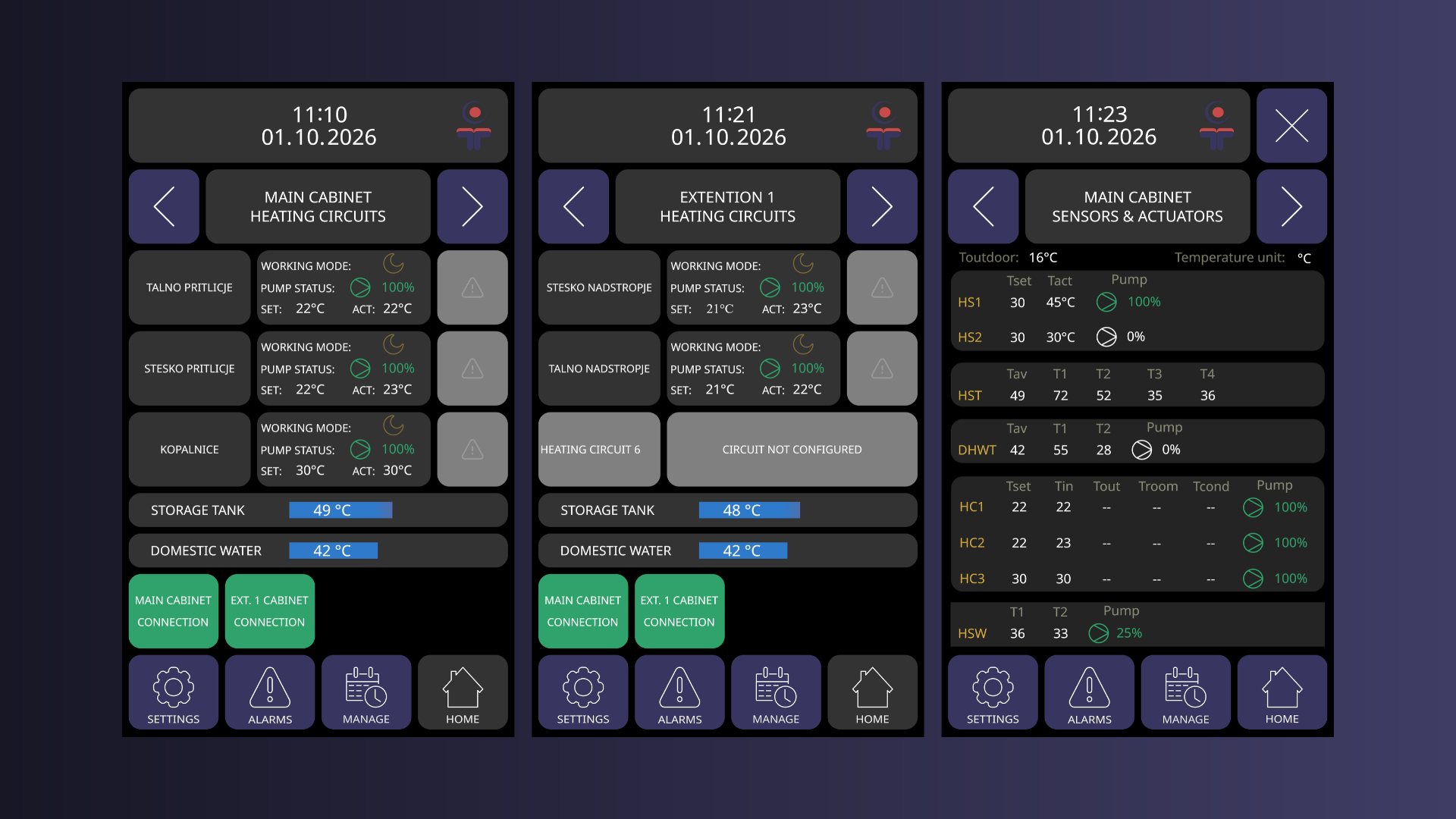
In this project, the installer was also the end user, giving direct insight into both installation and everyday use. Installation began with mounting the cabinet, connecting it to the power supply, and registering the controller in SmartehCloud. The installer entered the boiler room’s configuration via the 7″ touchscreen, and the system automatically generated the wiring diagram, which is also accessible via a web browser (e.g. Google Chrome) and was printed out by the installer for easier wiring.
Next came the wiring of temperature sensors and other components (with the cabinets unpowered), followed by setting heating curves, circuit schedules, and system alarms. The user now has remote access to real-time data for continuous monitoring and energy optimization.
The installer highlighted fast, efficient installation and a logical commissioning process. The modular design covered the entire 6-circuit system and still has potential for future upgrades, automating the system without the need for expensive custom solutions.
Installation: RE-MONT-ING